 Denys Mitchell
Key Takeaways
- Stop the dryer and unplug it at the first burning smell, and do not run another load until the cause is known.
- Lint on a hot surface or a restricted exhaust duct is the most common cause, and both are fixable by cleaning.
- A smell that returns after the lint screen, duct and vent cap are clear points to an electrical or heating fault.
- F1E3 and F3E2 both carry a fire risk on this site and mean the dryer should stay off.
- A routine of cleaning the screen every load and the duct every year prevents most of these smells.
The Bottom Line
Stop and unplug first, then clear the lint screen, the duct and the outside vent cap. If the smell survives a clean airflow path, keep the dryer off and have it checked.
Few appliance symptoms deserve action before diagnosis, and a burning smell from a dryer is one of them. The cause is often as ordinary as lint on a hot surface, but lint is exactly what dryer fires are made of, so the sensible order is to stop the dryer first and work out the reason afterward. This guide covers what to do in the first minute, what the smell usually points to, and which Whirlpool dryer codes carry a fire risk of their own.
| What you notice | What it usually points to | What to do now |
|---|---|---|
| Burning or singeing smell during the cycle | Lint on a hot surface, or restricted airflow | Stop the dryer and unplug it |
| Cycles taking about 50 percent longer | A restricted exhaust duct | Clean the lint screen and the duct |
| Exterior of the dryer very hot to touch | Heat not leaving through the vent | Stop and check the vent |
| Vent flap outside not opening fully | Lint or debris at the exterior cap | Clear the cap before the next load |
| Smoke, or melted-looking wiring | A fault beyond lint | Unplug and call for service |
Whirlpool Dryer Burning Smell: What to Do First
Stop the cycle, unplug the dryer and leave the door closed until you have checked it. If there is any visible smoke, do not open the door to look, because fresh air feeds a fire, and call for emergency help instead of investigating. A smell with no smoke is a reason to stop and inspect, not to finish the load.
- Stop the dryer and unplug it, or switch off its breaker if you cannot reach the plug safely.
- Let it cool, then remove the lint screen and look for a layer of lint or a scorched patch.
- Check the drum and the door seal for anything that should not be there, such as a stray item or melted fabric.
- Go outside and look at the vent cap, since a flap that is stuck or choked with lint traps the heat inside.
- Do not run another load until the smell has a known cause and the airflow path is clear.
If the smell returns after all of that, the problem is not lint, and the dryer should stay off until a technician has looked at it.
Is a Burning Smell From a Dryer Always an Emergency?
No, but treat it as one until you have stopped the machine and checked it. Lint trapped on the screen, in the housing or along the duct is highly flammable, and even a thin layer can ignite when the heating element cycles on. A clogged screen or duct also pushes drum temperatures well above normal, which raises the ignition risk and shortens the life of the thermal fuse and the heating element.
The reassuring cases are the ones where cleaning fixes it: a screen that has not been cleaned, a duct that has not been cleaned in years, or a vent flap choked with debris. The worrying ones are where a clean dryer still smells, because that points at an electrical or heating fault.
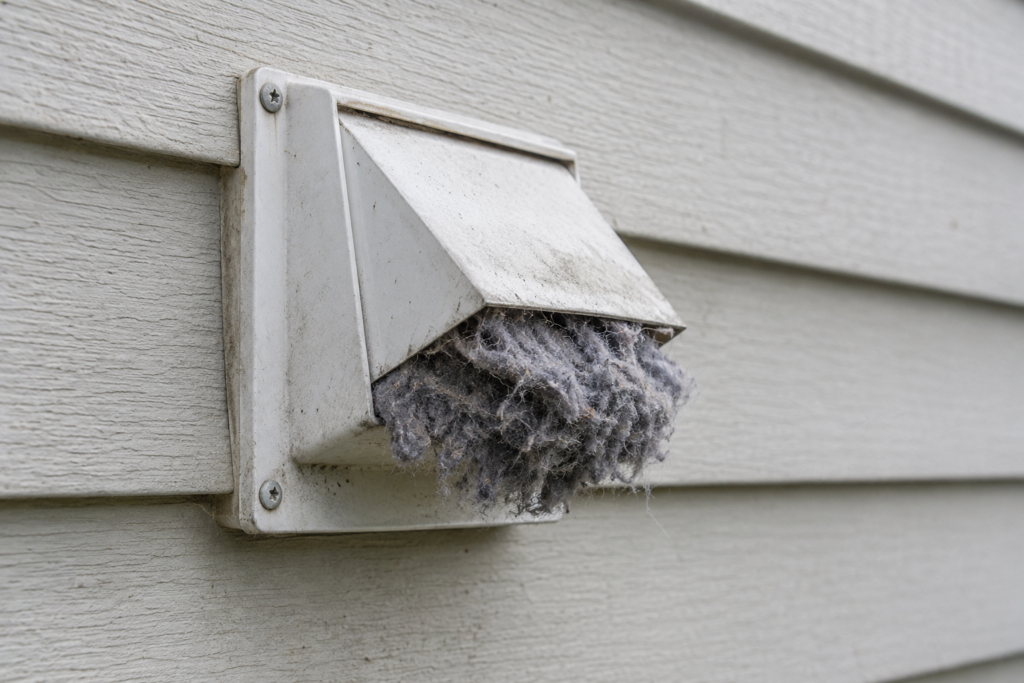
It helps to remember how little time this takes. Cleaning the lint screen is a ten-second habit, and a thorough check of the screen, the housing and the outside cap is a matter of minutes. A dryer that is stopped, cooled and inspected has cost you a load of laundry. A dryer that is left running with a clogged vent can cost a great deal more.
Warning Signs That Come With the Smell
The smell rarely arrives alone, and the other signs help you tell airflow trouble from a fault. Our safety notices list the same group of signals.
- Clothes needing more than one cycle to dry: airflow is restricted somewhere between the drum and the outside.
- A hot laundry room or a damp, humid one: the exhaust is not leaving the building the way it should.
- Lint visible at the outside vent: the duct is shedding lint it should have carried out.
- The dryer shutting off before the cycle ends: a safety device is tripping on heat.
- Repeated thermal fuse or heating element failures: overheating is happening again and again.
Which Whirlpool Dryer Codes Come With a Fire Risk?
Two stand out on this site: F1E3 and F3E2. F1E3 is a motor control unit fault, and the page warns that a stationary drum with active heat is a fire hazard, so stop immediately if you smell burning or see smoke. F3E2 is a shorted inlet thermistor, which removes an overheat guard, and the page tells you not to use the dryer until the sensor is repaired.
- F1E3: the drum may sit still while the heater runs, which scorches whatever is at the bottom.
- F3E2: the dryer runs without inlet temperature sensing, so one safeguard is missing.
- A harness with melted insulation: a more serious short that may have damaged nearby parts.
Our Whirlpool dryer F1E3 and dryer F3E2 pages list the symptoms and safe checks. The wider family is in the Whirlpool dryer error code list.
How Do You Clear the Airflow Path for Good?
With a routine, because most burning smells trace back to airflow. Our notices set it out in four parts.
- Every load: peel the lint off the screen, and never run the dryer without the screen installed.
- Monthly: wash the screen with warm soapy water to remove softener residue, and vacuum the lint trap housing.
- Each year: clean the full duct from the dryer to the outside cap, or every six months at five or more loads a week.
- At installation: use rigid or semi-rigid metal duct instead of plastic flexible duct, as Whirlpool installation guidelines require.
A smoke detector in the laundry area is a cheap second line of defense. Gas dryers add one more item, an annual inspection of the gas line and valve by a certified gas technician, and our Whirlpool dryer safety guide covers it, with the lint routine in our exhaust vent cleaning advisory.
When to Call a Technician
Call for service if the smell persists after the airflow path is clear, if a code from the list above is showing, or if a blown thermal fuse keeps coming back. Our Whirlpool dryer repair service checks the heater, the sensors and the airflow in one visit.
A diagnostic visit starts from $89, and the final price is confirmed after the on-site diagnosis, with a written estimate before work begins. Book a visit or send us the model number and describe the smell and when it happens, and we will tell you what to check first.