 Denys Mitchell
Key Takeaways
- F7E1 points at the heating element or its circuit: the element, a thermal fuse or a relay on the control board.
- On a dishwasher under about eight years old with a first heating fault, the repair is usually worth doing.
- A board relay failure pulls the main control into the bill, so weigh it against replacement.
- The machine can run without heat, but dishes are not sanitized and detergent may not dissolve.
- Stop using it if you smell burning during a cycle.
The Bottom Line
A failed element or thermal fuse on a younger dishwasher is worth fixing. If the board relay is the cause, or the machine is past ten years old with other faults, price a replacement next to the repair.
Cold water, wet dishes and a white film on the glasses are the three signs that a dishwasher has stopped heating, and on a Whirlpool the display may add an F7E1. The question behind the code is narrower than whether to keep the machine: it is whether the heating circuit is worth paying to fix, and the answer depends on which of three parts has failed and how old the dishwasher is. This guide is about that one repair, and the parent is it worth repairing a Whirlpool dishwasher guide covers the whole machine.
| Your situation | Usual verdict | Why |
|---|---|---|
| Under 8 years old, first heating fault | Repair | One part on an otherwise healthy machine |
| 8 to 10 years old, element or thermal fuse failed | Repair if nothing else is wrong | A contained fix, but little life is left to pay it back |
| Relay on the control board failed | Weigh against replacement | A board fault pulls the main control into the bill |
| Over 10 years old with other faults | Lean toward replacing | Dishwashers have the shortest lifespan of the major appliances |
What Does F7E1 Mean on a Whirlpool Dishwasher?
It signals a fault in the heating element or in the circuit that powers it, according to our dishwasher F7E1 page. The machine can still run a cycle, but the water stays cold, detergent dissolves poorly and the heated dry phase does nothing. The page rates it medium severity, which fits: nothing is leaking or burning, but the machine has stopped doing a core part of its job.
- Dishes come out wet — the heated dry phase has no heat to work with.
- Water stays cold in the tub — opening the door mid-cycle reveals no steam.
- White film on glasses — cold water does not dissolve detergent properly.
- Cycles run long — the page notes the board may extend the wash while it waits for the water to warm up.
Wet dishes alone can also come from an empty rinse-aid dispenser, so look for the cold water and the residue before deciding the heater is at fault. If your display shows a different F7 code, such as F7E2, note that our site covers F7E1 only, and the advice here does not automatically carry over.
Which Three Parts Can Cause the Heating Fault?
The F7E1 page names three, in order of likelihood, and they differ sharply in cost. Knowing them lets you read a quote.
- Burned-out heating element — the resistive wire has broken and shows no continuity on a meter. This is the classic case and the cleanest repair.
- Blown hi-limit thermostat — a thermal fuse wired in series with the element opens after an overtemperature event, cutting power to an element that is itself fine.
- Failed heating relay on the control board — the relay that switches power to the element fails open, so power never reaches a healthy element.
The first two are inexpensive parts. The third is where the economics change, because replacing the board is a larger repair, and a technician confirms it with a live voltage test at the element terminals during a cycle. Our page gives a healthy element as roughly 15 to 30 ohms and a bad one as open or infinite, which is what a meter shows within minutes.
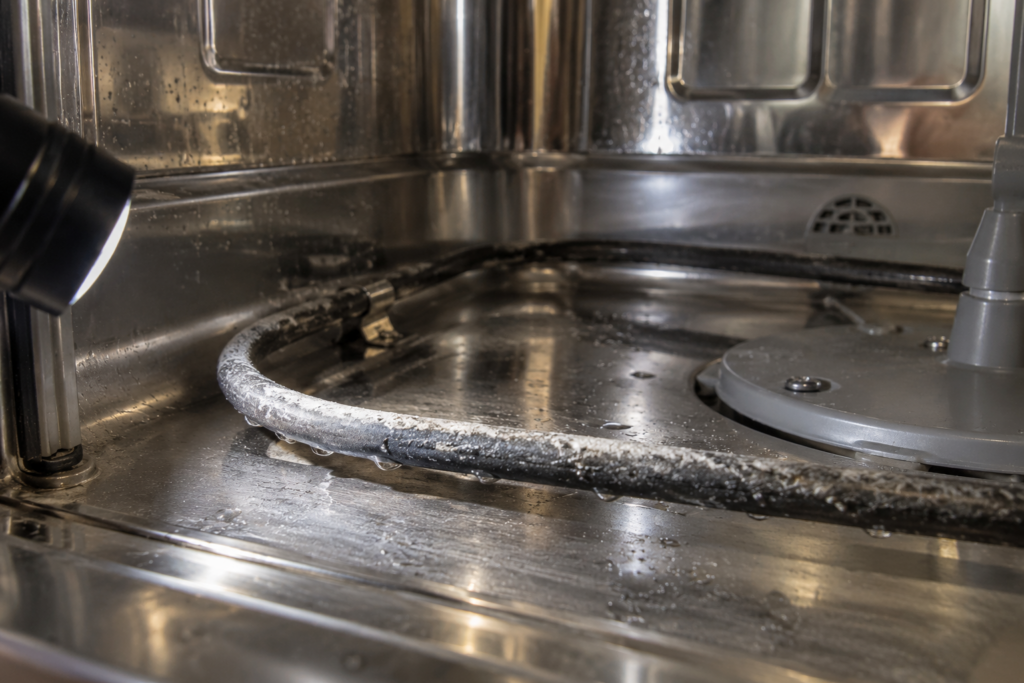
Is a Whirlpool Dishwasher Heating Element Worth Fixing?
Yes on a machine under about eight years old, and usually yes on one up to ten if the element or the thermal fuse is the only fault. The F7E1 page lists a typical repair from $175, and our parent guide puts the average Whirlpool dishwasher lifespan at 9 to 12 years, which is why age carries more weight here than it does for a washer or a refrigerator.
A useful test of any quote is whether it names the part. A technician who finds the element open on a meter, or the thermal fuse open in series with it, is quoting a small repair. A quote that jumps straight to the control board should come with the live voltage test that justifies it, because replacing a good board for an element problem is the most expensive way to be wrong.
The calculation tightens with a second fault. A heater that has failed on a machine that also has a leaking door seal, a noisy circulation pump or a stained, scaled tub is telling you the machine is wearing out as a whole. Our parent guide treats a cracked tub, a corroded spray arm hub or a persistently moldy interior as reasons not to repair at all, whatever the heater costs.
- Age — the biggest input; every year past eight shortens the payback.
- Which part failed — an element or thermal fuse is a small job; a board relay is a bigger one.
- Other symptoms — leaks, noise or a failing drain point the same way as the heater.
- How you use the machine — a household that sanitizes bottles or relies on the dry cycle will miss the heater more than one that air-dries.
Can You Keep Running the Dishwasher Until It Is Fixed?
For ordinary loads, yes for a short time, but not for anything that needs hot water to be safe. The F7E1 page says the dishwasher can run a cycle without the heating element, though dishes are not sanitized and detergent may not dissolve properly, and it advises against running it long term. It also says to stop using the machine for baby items or cutting boards that need hot-water sanitizing until the fault is resolved.
Stop completely if you smell burning during a cycle. The page notes that this can mean the element is arcing or the relay on the board is overheating, and neither should be run. A breaker reset for five minutes may clear the code temporarily if a relay tripped, but if the element itself is burned out the code returns immediately or within a cycle or two.
What to Do Before You Book
A few minutes of checking makes the visit shorter and the diagnosis sharper.
- Spin the spray arms by hand — the page notes that a blocked arm can cause hot spots that trip the thermal fuse.
- Load tall items to the sides — keep the center of the lower rack, where the spray arm hub sits, clear.
- Run a heavy cycle and feel the tub — warmth after about twenty minutes suggests the element still works and a relay or fuse is intermittent.
- Note whether the code returns after a breaker reset — a code that clears and comes back after two or three cycles suggests an intermittent thermal fuse.
Our dishwasher repair costs guide lists the cost of each part, and our dishwasher repair or replace guide covers the decision at the level of the whole machine. The dishwasher repair page describes what a visit covers.
The final price is confirmed after the on-site diagnosis, with a written estimate before any work begins. You can book a visit or send us the model number and the exact code so the technician arrives with the right part.