 Denys Mitchell
Key Takeaways
- The Duet is Whirlpool's front-load washer platform, and its wear points — door boot, tub bearing, suspension — differ from a top-load washer.
- A door boot replacement is a contained, well-understood repair worth doing on a Duet of nearly any age.
- A tub bearing failure requires opening the outer tub and is the point where age and prior repairs matter most to the decision.
- The door boot fails from constant flexing sealing a horizontal drum, a stress a top-load washer's design does not create.
- A machine under roughly ten years old with a bearing failure is usually still worth repairing; older machines deserve a direct cost comparison.
The Bottom Line
On a Duet, ask which part failed before asking whether the machine is worth fixing. A door boot or suspension repair is almost always worth it; a tub bearing job on an older machine is where the replacement conversation genuinely starts.
Whether it is worth repairing a Whirlpool Duet washer comes up specifically because Duet was Whirlpool's front-load platform, and front-load washers wear differently than the top-load machines most repair-cost guides default to. The door boot, the tub bearing and the shock absorbers see stress that a top-load washer's design simply does not create, and those three parts define most of the repair-or-replace conversation on a Duet.
| Symptom | Likely part | Repair outlook |
|---|---|---|
| Water pooling at the base of the door | Door boot gasket, cracked or torn | Usually a good repair candidate |
| Loud grinding during spin | Tub bearing | Depends heavily on machine age |
| Excessive vibration, machine walks during spin | Shock absorbers or suspension springs | Usually a good repair candidate |
| Musty odor regardless of cleaning | Boot gasket and drum, mold buildup | Cleaning first, replacement if persistent |
Is a Duet Washer Worth Fixing, or Should It Be Replaced?
In most cases, yes — a Duet is worth fixing when the fault is the door boot, the suspension, or a control component, and worth weighing more carefully when the fault is the tub bearing on a machine already a decade or more old. The platform itself is not the deciding factor; which specific part failed is. A door boot replacement is a contained, well-understood repair on nearly any front-load washer regardless of age. A bearing replacement is a bigger job that involves partially disassembling the outer tub, and on an older machine that labor cost is worth weighing against how many other parts are also nearing the end of their life.
This is the same question our general is it worth repairing a Whirlpool washer guide walks through for any washer on this site — age, repair cost relative to replacement cost, and the condition of the rest of the machine. A Duet answers those questions the same way; it just has a different set of parts that typically fail first. For the equivalent repair-versus-replace framing on the same platform, our Whirlpool washer repair or replace guide covers the general decision this article's door boot and bearing specifics sit alongside.
Why Does the Door Boot Fail More on a Front-Load Washer?
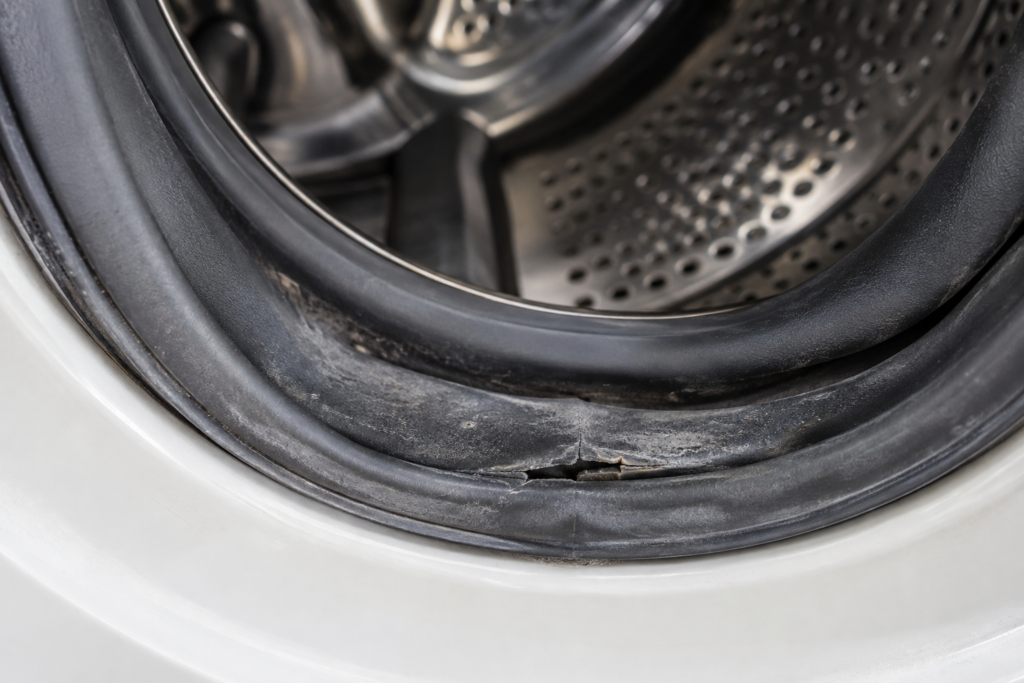
Because it does a job a top-load washer's design never asks of any single part: sealing a horizontal drum against a full tub of water while flexing every time the door opens and closes. The rubber gasket around the door is under constant mechanical stress in a way no equivalent part exists on a top loader, and it accumulates small cracks and tears over years of that flexing, particularly around the bottom fold where water and detergent residue also collect.
- Check the bottom fold of the boot first — cracks start there more often than anywhere else on the gasket.
- Wipe the gasket dry after each load if odor or mold is a recurring issue, rather than leaving the door closed on residual moisture.
- Run a cleaning cycle monthly on machines that see heavy use, which reduces the residue buildup that accelerates gasket wear.
- Do not ignore a small tear. A boot that is leaking a little now leaks considerably more once the tear reaches the structural fold.
- Leave the door ajar between loads to let the drum and gasket dry out, rather than sealing in moisture continuously.
- Check for coins or small objects trapped in the fold, since sharp debris caught there is a common cause of a puncture that starts small.
What About the Tub Bearing — Is That Always a Replace Decision?
Not always, but it is the point where the calculation changes most on a Duet. A tub bearing failure is loud, gets progressively louder, and on a front-load washer requires opening the outer tub assembly to reach — a bigger job than the equivalent repair on many top-load machines. On a Duet that is otherwise healthy and under roughly ten years old, that repair is still commonly worth doing. On a machine well past that age, or one that has already had other significant repairs, a bearing job is the moment most owners reasonably start comparing the repair estimate against a new washer's price rather than proceeding automatically.
- Grinding noise that gets louder with spin speed: likely the tub bearing, confirmed by a proper diagnosis.
- Machine under about ten years old, otherwise reliable: repair is usually the sensible choice.
- Machine already past that age with other wear showing: weigh the bearing job against replacement cost directly.
- Vibration alongside the noise: check the suspension and shocks too — they wear on a similar timeline and are cheaper to replace.
- Ask what the bearing job involves on your specific model before approving it — some Duet models require more disassembly than others.
- Compare the estimate against a new washer's price only once the actual bearing cost is confirmed on site, not from a general estimate.
Suspension springs and shock absorbers are worth a separate mention, since they are often replaced alongside a bearing repair even when they were not the original complaint. A front-load washer relies on its suspension to keep the spinning tub from transmitting excessive force to the cabinet, and worn shocks show up as a machine that walks or vibrates noticeably during spin, sometimes bad enough to move the washer several inches across the floor over a period of months. Replacing shocks alongside a bearing job adds relatively little to the labor, since the tub is already partially disassembled to reach the bearing in the first place — which is another reason a technician who has the cabinet open checks the whole suspension system rather than only the specific part that prompted the visit. Our Whirlpool washer repair or replace guide covers that broader comparison in more depth once the specific part and cost are known.
Getting a Real Answer Instead of Guessing From a Symptom
Water at the base of the door, a grinding noise, and excessive vibration can each point at more than one part, and only an actual inspection tells them apart with confidence. Our Whirlpool washer repair service covers the full range of front-load specific failures — door boot, bearing, suspension and control components — in one visit, and our broader appliance diagnostics visit is the right starting point if you are not yet sure the washer is even the source of a noise or a leak.
A diagnostic visit starts from $89, applied toward the repair if you proceed. The final price is confirmed after the on-site diagnosis, with a written estimate before any work begins. Book a visit or describe the symptom and we will tell you honestly whether the repair is worth it on your specific machine.