 Denys Mitchell
Key Takeaways
- Hard water deposits coat the spray arm holes, the heating element and the pump impeller, reducing efficiency and accelerating wear.
- Run a descaling cycle monthly with a dishwasher cleaner tablet or a cup of white vinegar upright in the lower rack.
- Wipe the tub quarterly with a citric acid solution to lift the hard-water film.
- Clear the spray arm holes with a toothpick every month and check the arm for cracks.
- A water softener upstream is the most effective long-term fix.
The Bottom Line
Scale is slow and cheap to prevent: one monthly cycle, one quarterly wipe and a toothpick for the spray arm. If glasses stay cloudy or the machine grinds or leaves water behind, the scale has already caused wear.
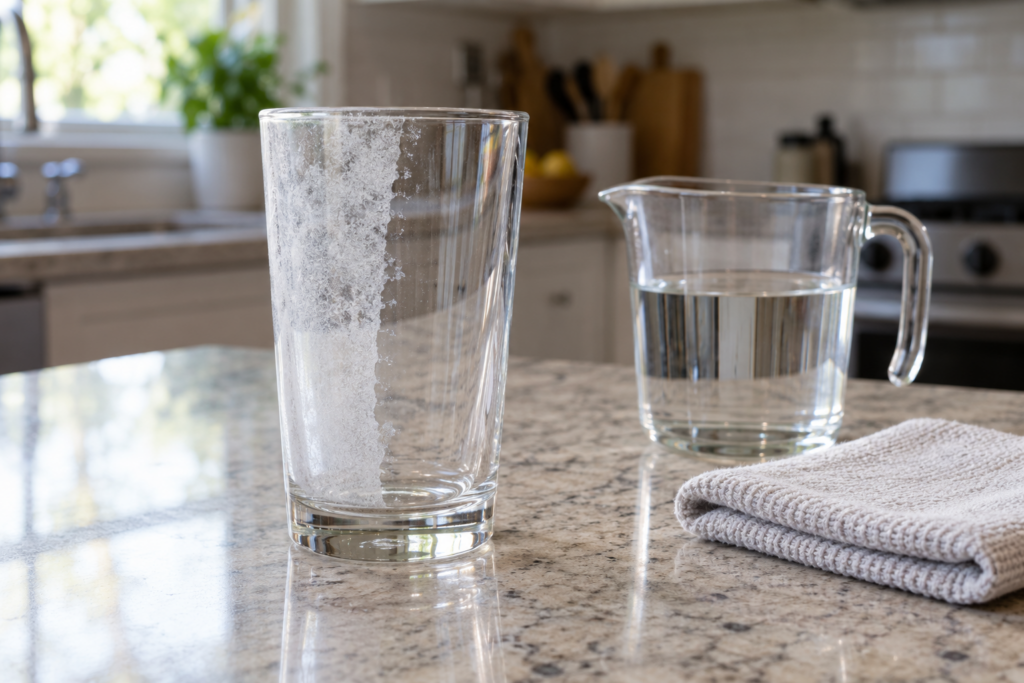
Hard water leaves minerals behind every time it dries, and a dishwasher is a sealed box where water is sprayed, heated and dried a thousand times a year. The film you see on the glasses is the visible part. The part you do not see is the scale that settles in the spray arm holes, on the heating element and around the pump impeller, which is where a slow loss of cleaning performance turns into a repair. This guide is about keeping that buildup under control on a Whirlpool dishwasher, using the monthly and quarterly habits our maintenance guide recommends.
| Where scale builds | What you notice | What clears it |
|---|---|---|
| Spray arm holes | Weak spray, gritty or unrinsed dishes | A toothpick, monthly |
| Tub walls and floor | White, chalky film on the stainless or plastic | Citric acid solution, quarterly |
| Heating element | Slower, less efficient heating over time | A monthly cleaning cycle |
| Pump impeller | Extra wear, then noise and poor drain | Prevention; a technician if it grinds |
| Glasses and plates | Cloudy film that wipes off with vinegar | The same monthly cycle, plus a softener |
Why Does Hard Water Clog a Dishwasher?
Because the minerals in hard water do not leave with the water. Each time a drop evaporates in the tub, a trace of calcium and magnesium stays behind, and our Whirlpool dishwasher maintenance guide notes that these deposits coat the spray arm holes, the heating element and the pump impeller, reducing efficiency and accelerating wear. It also names hard water as the enemy of dishwasher longevity, which is a fair summary.
The effect is gradual, which is why people miss it. A spray arm that loses a few holes to scale delivers a little less water to the upper rack, then a little less again, and the first thing anyone notices is that the glasses look dull. By then the same scale has usually been building on the element and the impeller for a year or more.
- Dull or cloudy glasses — the earliest and most reliable sign.
- A chalky white film on the tub — most visible near the door seal and the lower corners.
- Dishes that need a second wash — a sign the spray is reaching less of the load.
How Do You Remove Whirlpool Dishwasher Hard Water Buildup?
Run a descaling cycle once a month and wipe the tub with a citric acid solution every quarter, which is the routine in our maintenance guide. The monthly cycle uses either a dishwasher cleaner tablet such as Affresh or a cup of white vinegar. For the vinegar version, stand the cup upright in the lower rack and run a hot cycle on an empty machine. Your use-and-care guide states what your model allows, so check it before you choose.
- Empty the machine first — nothing in the racks, and the filter cleaned before you start so the cleaner reaches the sump.
- Use one cleaner at a time — never mix vinegar, citric acid and a commercial cleaner, and never add bleach to any of them.
- Run it hot — scale dissolves better in hot water, and the cycle also warms the element.
- Wipe the tub quarterly — a cloth with citric acid solution lifts the hard-water film from the walls and the floor.
If you have never done this, expect the first cycle to lift a lot, and do not be alarmed by cloudy water in the drain. Run a second plain cycle afterwards so nothing is left in the sump.
Clear the Spray Arm Holes
This is the monthly job that matters most for cleaning performance, and it is a short job. The spray arm sits on the floor of the tub or under the upper rack, and the small holes along its length are the first things scale closes.
- Take out the lower rack — the arm is then fully exposed.
- Spin the arm by hand — it should turn freely; a stiff arm needs a closer look at its hub.
- Clear each hole with a toothpick — push the deposit out rather than in, and rinse the arm under a tap.
- Inspect it for cracks — our maintenance guide suggests a seasonal check of the arm for cracks or warping.
A corroded arm hub is one of the few things our is it worth repairing a Whirlpool dishwasher guide treats as a reason not to repair, so catching a cracked arm early is useful.
How Often Should You Descale a Whirlpool Dishwasher?
Monthly for the cleaning cycle and quarterly for the tub, and more often if the water is very hard. A household that runs the machine twice a day will see the film return faster than one that runs it three times a week. The schedule in our maintenance guide also puts the spray arm holes and the door gasket on a monthly check, and the filter on a monthly clean.
Our dishwasher standing water guide covers the filter in detail, and the two jobs fit into the same visit under the sink: filter first, then the cleaning cycle.
Does a Water Softener Help?
Yes, and our maintenance guide calls a softener upstream of the dishwasher the most effective long-term solution. Cleaning cycles treat the scale after it forms, while a softener reduces how much forms in the first place. It is a plumbing decision for the whole house rather than the dishwasher, so it is worth considering when the dishwasher is only one of several appliances showing mineral scale.
- Check your water first — your water supplier's annual report or a test strip tells you how hard it is.
- Look at the faucets — scale on the aerators and showerheads means the dishwasher is dealing with the same water.
Habits That Slow Scale Down
A few everyday habits from our maintenance guide reduce how much work the cleaning cycle has to do.
- Scrape, do not pre-rinse — pre-rinsing wastes water and can confuse the sensors, while scraped food ends up where the filter can catch it.
- Keep the spray arms free — load tall items to the sides and back so nothing blocks the arm from turning.
- Dry the tub before a long absence — run a cleaning cycle, leave the door slightly ajar and turn off the supply valve under the sink.
- Do not use abrasive pads — they scratch the filter mesh and the tub, and a scratched surface holds scale better.
When Scale Has Already Done the Damage
Cleaning will not restore a part that has worn out. Grinding from the pump area, water left in the tub after a cycle, or dishes coming out cold are signs that scale has moved from a cosmetic problem to a repair. For the cold-water case, dishwasher F7E1 covers the heating circuit, and for standing water dishwasher F9E1 covers the drain path.
Our preventive maintenance service includes a professional inspection of the pump, motor and board, and the dishwasher repair page covers repairs. You can book a visit or tell us what the tub and the glasses look like and we will advise on the next step.