 Denys Mitchell
Key Takeaways
- Replace the filter every six months or about 200 gallons, whichever comes first, even before the indicator light changes.
- Flush 1.5 to 2 gallons through the dispenser after a change, and reset the indicator using your manual.
- A clogged filter restricts flow, stresses the inlet valve and is the easiest cause of slow ice to rule out.
- Use an OEM or NSF-certified filter made for your exact model; off-brand cartridges can restrict flow.
- Water filters are consumables and are not covered by the Whirlpool warranty.
The Bottom Line
Put the six-month change on a calendar and flush the new filter before drinking from it. If ice is still slow with a fresh filter and good pressure, the inlet valve is the next suspect.
Whirlpool refrigerator water filter replacement is the one maintenance job on a fridge that most owners do late, because nothing visibly breaks while the filter wears out. The water just flows a little slower, the ice tastes a little flat, and the indicator light shifts color on the control panel. By then the filter has been past its useful life for weeks, and a clogged cartridge can start to cost more than the cartridge itself.
| What you notice | What it usually means | What to do |
|---|---|---|
| Filter indicator turns red or orange | The filter has reached its service interval | Replace it and reset the light |
| Dispenser flow is weak or slow | A saturated filter restricting water flow | Replace the filter before checking anything else |
| Chlorine or musty taste in water or ice | Filter media is exhausted | Replace it and flush the line |
| Ice maker slows down or stops | Filter, water pressure or inlet valve | Change the filter first, then test pressure |
How Often Should You Replace a Whirlpool Refrigerator Water Filter?
Every six months, or after about 200 gallons of use, whichever comes first, even if the indicator light has not changed. That is the interval given on this site's own water filter notice, and the refrigerator maintenance guide uses the same six months for models with a water dispenser or ice maker. A household that drinks a lot of filtered water or makes a lot of ice will reach the volume limit before the calendar does.
The light is a reminder, not a measurement. Set a recurring reminder on your phone for the same day each half-year and treat the indicator as a backup, so the change does not depend on noticing a color.
- Heavy water and ice use — the 200-gallon limit arrives well before six months in a busy household.
- Vacation or empty house — the filter ages with the calendar even when little water passes through it.
- Move or new install — change the filter when you set the refrigerator up rather than trusting the one that came with it.
Replacing the Filter Step by Step
The steps are short, and the details of the housing differ by model, so keep your use-and-care guide beside you. Our Whirlpool refrigerator maintenance guide notes that most WRF and WRS models use a push-button filter housing that makes the swap easy.
- Find the right part number on the label inside the refrigerator or in the use-and-care guide; filters are not interchangeable across every model.
- Remove the old filter following the release method your model uses, with a towel under it for the few drops it will release.
- Seat the new filter fully until it locks in place, with nothing forced.
- Flush 1.5 to 2 gallons through the dispenser before drinking, which clears air and loose carbon from the new cartridge.
- Reset the indicator using the procedure in your manual, which on many models is a press and hold of a reset button.
- Throw the old filter away; a used cartridge is not something to clean and reuse.
The site's notice also suggests discarding the first couple of batches of ice after a change. It is a minor chore, and it keeps any carbon fines out of a drink.
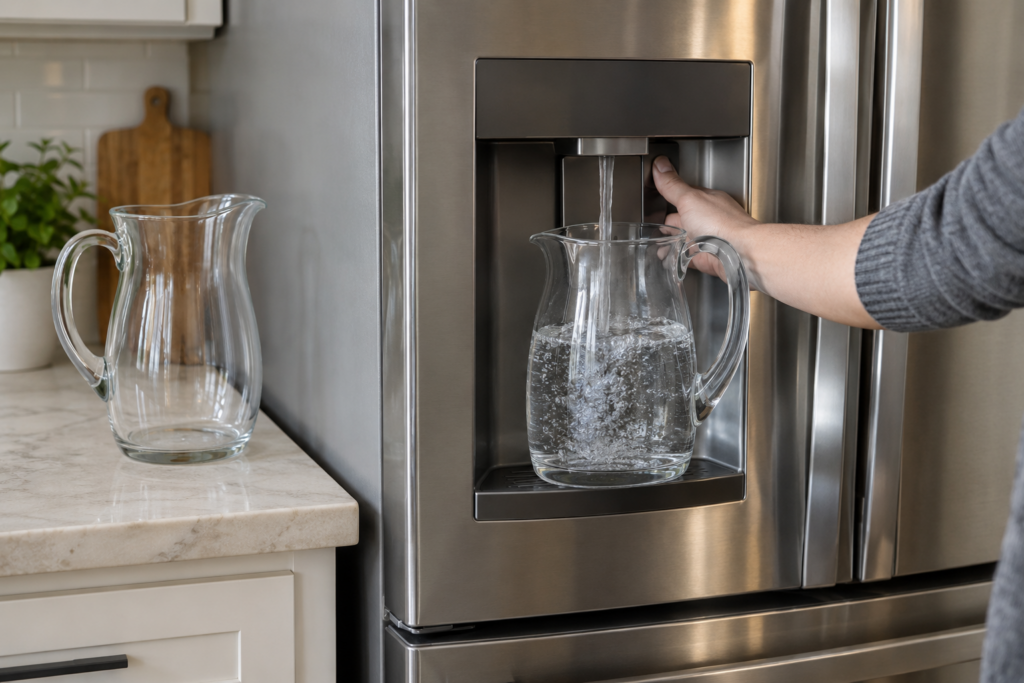
What a Clogged Filter Does to the Refrigerator
It restricts the flow that everything downstream depends on. The maintenance guide notes that a clogged filter stresses the inlet valve and can cause ice maker failure over time, and the ice maker pages list a saturated filter as the single easiest cause of slow ice production to rule out. Water pressure below about 20 psi produces the same slow-fill symptoms, so a new filter and a pressure check belong together.
- Slow or empty ice tray — the mold fills too little water, which shows up on the ice maker SLOW and NO-ICE codes.
- Weak dispenser flow — the first symptom, and usually the one that sends people looking for the cause.
- Stressed inlet valve — the valve works harder against a restricted line, which is a repair-sized problem rather than a maintenance one.
- Off taste or smell in ice — a sign the cartridge is overdue and the water quality is slipping.
Checking Pressure and the Supply Line
A fresh filter on a weak supply still gives a weak dispenser, so spend two minutes on the water side before deciding the filter was the problem. The ice maker pages put the threshold at about 20 psi, below which the mold may not fill, and they suggest looking at the fittings at the wall valve, any inline filter and the ice maker inlet for moisture or mineral crust.
- Open the shutoff valve fully — a partly closed valve behaves like a clogged filter.
- Look for a kinked line behind the refrigerator — a sharp bend after the unit was pushed back is a frequent culprit.
- Check fittings for dampness — a weeping connection needs tightening or reseating, and the water should be off while you do it.
If you find a leak, do not push the refrigerator back into place until it is dry. Water behind a refrigerator is rarely noticed until the floor has been damaged.
Can You Use an Off-Brand Water Filter?
You can, but the site's ice maker guidance is to use OEM or NSF-certified filters, because off-brand cartridges can restrict flow more than the manufacturer's specification allows. The practical risk is the same as with a clogged filter: low flow, slow ice, and an inlet valve working harder than it was designed to. If you do buy a third-party filter, check that it is certified and made for your exact model before you rely on it.
The safer habit is to keep one spare cartridge in the pantry, labeled with the model number. A filter you have to go and order is a filter that stays in the refrigerator for eight months instead of six, and the cost of the spare is far smaller than the cost of a stressed inlet valve.
Is a Water Filter Covered by the Whirlpool Warranty?
No. Water filters are consumables, and our Whirlpool warranty explainer states they are excluded from coverage even in the first year. A filter that causes a downstream problem can still prompt a diagnostic visit, but the cartridge itself is yours to buy and replace as part of normal upkeep.
When a New Filter Does Not Fix It
If the filter is new, the supply valve is open and pressure is adequate, and the ice maker still produces little or nothing, the cause is mechanical or in the water inlet valve. Our ice maker SLOW and ice maker NO-ICE pages describe that next step. The Whirlpool refrigerator repair page lists what a visit covers, with the final price confirmed after diagnosis and a written estimate before any work begins. Book a visit or send us the model number and what the dispenser is doing.